
Research
Glycan Synthesis
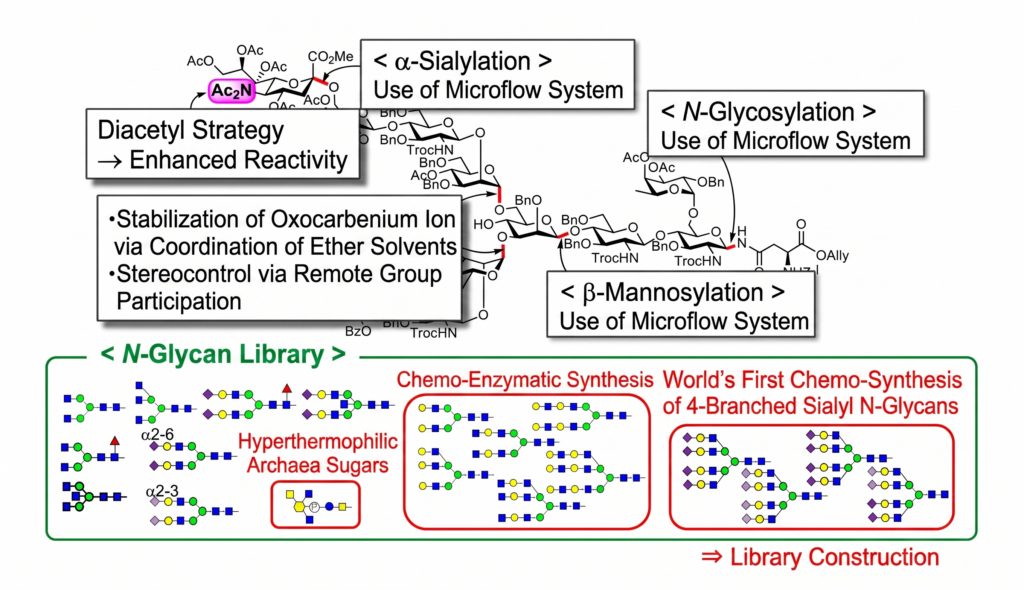
One of the reasons why glycan research has lagged behind research on nucleic acids and peptides is that reliable synthetic methods for glycans have not yet been fully established. To achieve the efficient synthesis of glycans, we are developing novel glycosylation methods and protecting-group strategies. We are also applying these synthetic technologies to the precise synthesis of various biologically active glycans, including asparagine-linked glycans (N-glycans), and constructing synthetic glycan libraries for use in chemical biology research.
Chemical Biology Using Synthetic Glycans
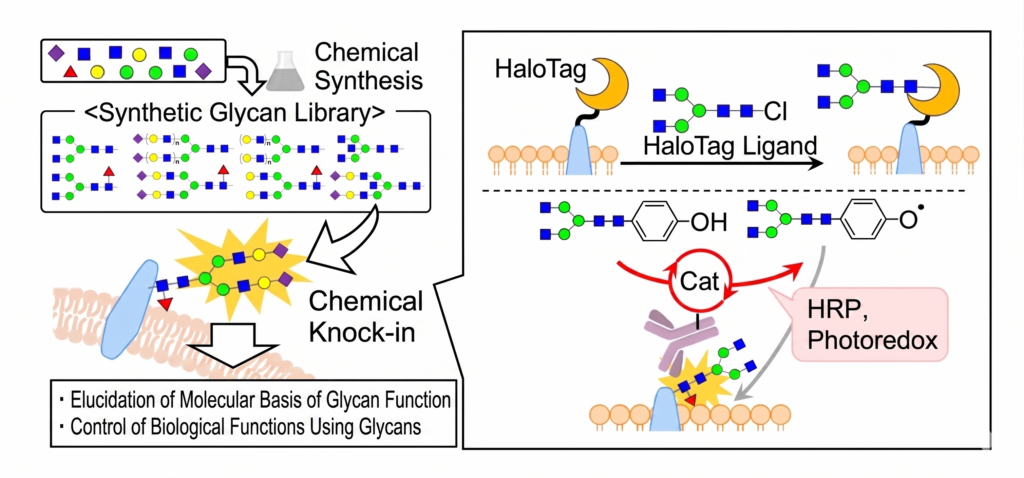
Using synthetic glycans, we are working to elucidate the molecular basis of glycan function. Glycans exist on the cell surface and provide the first point of contact with the external environment. They are therefore involved in many biological phenomena, including infectious diseases, immune responses, and cell adhesion. To clarify the functions of cell-surface glycans, we have developed a unique approach in which synthesized glycans are reconstituted on the cell surface, known as chemical knock-in, and are working to elucidate and control their functions. We are also investigating the analysis and regulation of glycan functions using glycan biosynthetic substrates and enzyme inhibitors.
Antibody-Recruiting Strategy
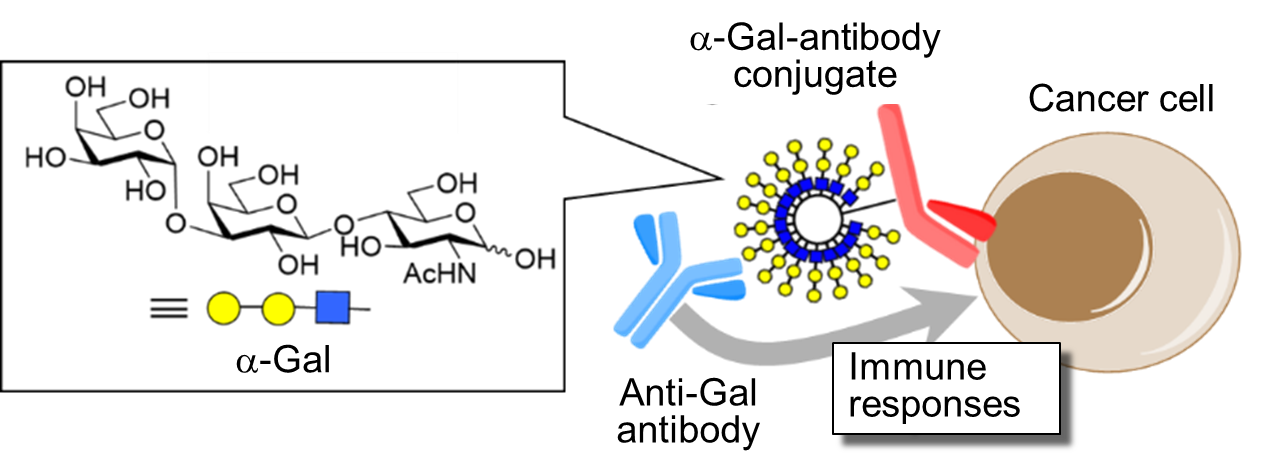
Glycan antigens such as the α-gal epitope serve as markers of foreign substances. Large amounts of natural antibodies against these glycans are present in the body and induce strong immune responses. We are investigating cancer therapy based on this mechanism. We synthesized α-gal and introduced it into a 16-valent dendrimer, which was then complexed with a cancer antibody. Using this α-gal–antibody complex, we successfully recruited endogenous natural antibodies to cancer cells and induced a strong immune response. We are conducting various studies toward the practical application of this method. We are also developing vaccines that focus on the immunostimulatory activity of glycan antigens.
Vaccine Development
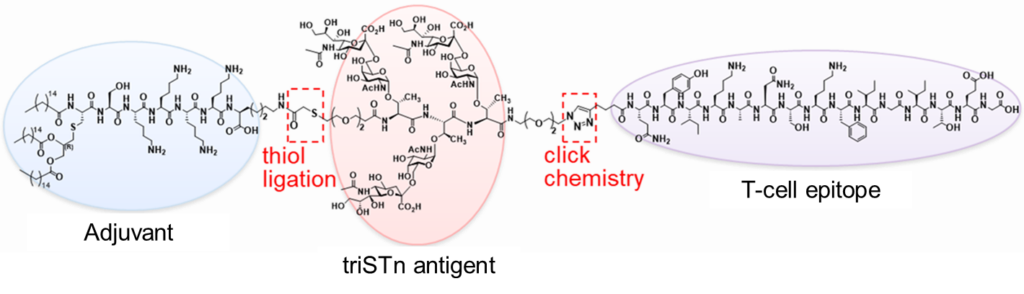
Glycans are often referred to as the “face of the cell.” They can serve as markers of disease and are promising targets for vaccine development. However, because glycans generally have low antigenicity, developing vaccines that target them is challenging. We have shown that antigen-specific immune responses can be induced by conjugating antigens with adjuvants, or immunostimulatory agents, through a self-adjuvanting vaccine strategy. We are currently exploring approaches such as the use of nanoparticle carriers to develop more potent methods with fewer side effects. In addition, we are also investigating peptide vaccines, mRNA vaccines, and related technologies.
Chemical Synthesis of Damaged DNA and Elucidation of DNA Repair Mechanisms
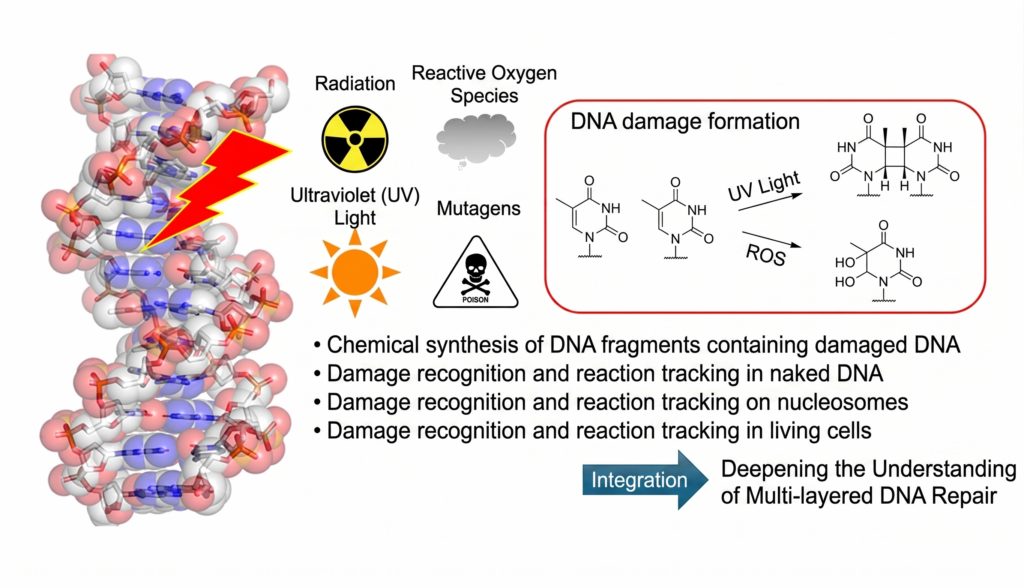
DNA is the substance of genes, and its bases, which carry genetic information, undergo changes in chemical structure, or damage, caused by chemical substances, ultraviolet light, and other factors. DNA damage can lead to mutations, cell death, and cancer. However, organisms possess systems, including enzymes and protein complexes, that repair DNA damage, thereby normally maintaining the accurate transmission of genetic information. We chemically synthesize DNA fragments, or oligonucleotides, containing various types of DNA damage and analyze the mechanisms by which DNA repair proteins recognize and process such damage. Through this work, we aim to deepen our understanding by integrating perspectives from the molecular level to the cellular level.
Dynamic Structural Analysis to Capture Proteins in Action
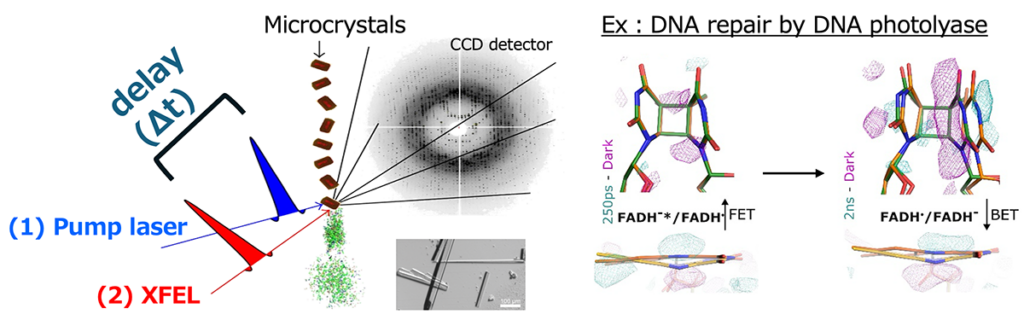
Elucidating the three-dimensional structures of biomolecules provides deep insights into the catalytic mechanisms of enzymes. X-ray crystallography is a powerful method for determining the chemical structures of biomolecules at high resolution. However, capturing the three-dimensional structure of an enzyme at the very moment it functions is not easy. With the advent of X-ray free-electron lasers (XFELs), which can emit X-rays as ultrashort pulsed light, it has become possible to obtain three-dimensional protein structures after initiating reactions with a visible-light laser from another light source. Using this method, we have successfully obtained structural information on the photoresponsive reactions of a group of blue-light receptor proteins known as the photolyase/cryptochrome superfamily. We are now aiming to apply this dynamic structural analysis method to the investigation of reaction mechanisms in various enzymes, including DNA repair enzymes, by drawing on our expertise in nucleic acid synthetic chemistry and molecular biology.